Two of the most common questions we hear after birth are "when can I exercise again?" and, a little more quietly, "when can we have sex again?" Both are completely normal things to wonder about, and the honest answer to both is: when your body is ready, not when the calendar says so...
Here's a realistic guide based on current evidence and what we see in clinic.
Why the 6 week check isn't a green light for everything
The 6 week postnatal check is an important appointment, but it's often misunderstood. It usually checks that your uterus is healing, your blood pressure is normal and you're coping emotionally. It usually doesn't assess your pelvic floor, your abdominal wall or whether your body is ready for impact. Unless you get a proper internal assessment by a womens health practitioner which is what we recommend to our patients!
At 6 weeks, your tissues are still healing and remodelling. That process continues for months, and often longer if you're breastfeeding, because lower oestrogen levels affect your tissues. So think of 6 weeks as a checkpoint, not a finish line. For more on this, see our postpartum recovery timeline.
A realistic return to exercise timeline
Weeks 0 to 6: rest, breathe and reconnect
- Gentle walking, starting with a few minutes and building up.
- Breathing exercises: let your belly and ribs expand as you breathe in, and gently draw in your pelvic floor and lower belly as you breathe out.
- Gentle pelvic floor exercises when it's comfortable, including after a caesarean.
- Rest whenever you can. Recovery is a job in itself.
Weeks 6 to 12: rebuild the foundations
- Longer walks, and low impact options such as stationary cycling and swimming once any bleeding has stopped and wounds have healed.
- Bodyweight strength: bridges, sit to stand, side-lying leg work, rows and modified planks if they feel good.
- Postnatal pilates or classes run by someone trained in postpartum recovery.
From 3 months: gradually add load and impact
The return to running guideline recommends waiting until at least 3 months after birth, and ideally 3 to 6 months, before running or high impact exercise. This applies after both vaginal and caesarean births. Before you start, it suggests you should be able to do the following without pain, leaking, heaviness or dragging:
- Walk for 30 minutes
- Balance on one leg for 10 seconds
- Do 10 single-leg squats on each side
- Jog on the spot for 1 minute
- Do 10 forward bounds, and 10 hops on each leg
If you can't do these comfortably yet, that's not a failure. It just tells you what to work on next. A women's health practitioner can assess you from around 6 weeks and give you a plan that suits your birth and your goals.
After a caesarean
A caesarean is major abdominal surgery, so give your scar and abdominal wall time. Avoid lifting anything heavier than your baby for the first 6 weeks where you can, and build up core work slowly. Once your scar has healed, gentle scar massage can help with sensitivity. Our c-section recovery guide has more detail.
Signs to slow down
Ease off and get checked if you notice any of these during or after exercise:
- Leaking urine, wind or faeces
- A feeling of heaviness, pressure or dragging in your vagina
- Pain in your pelvis, back, abdomen or scar
- Bleeding that returns or gets heavier, especially after 8 weeks
- Doming or bulging along the middle of your tummy that doesn't improve with better breathing
These are common and very treatable. They're a sign to adjust, not a sign you're broken.
When can I have sex after birth?
There's no rule that says you must wait a set number of weeks. Many health professionals suggest waiting until after your 6 week check, because the risk of infection and bleeding is highest in the early weeks while your body heals. But the real answer is: when you feel physically and emotionally ready. For many people that's later than 6 weeks, and that's completely normal...
What's normal
- Dryness. Low oestrogen after birth, especially while breastfeeding, can make the vagina dry. A water-based lubricant can make a big difference.
- Some discomfort the first few times, particularly if you had a tear, stitches or an episiotomy. Go slowly, try positions where you control the depth and pace, and stop if it hurts.
- Low libido. Broken sleep, feeding, body changes and a new baby all affect desire. Intimacy doesn't have to mean sex, and connection counts.
Contraception
You can get pregnant again before your first period returns!! ... so talk to your GP or midwife about contraception before you start having sex. Breastfeeding alone isn't a reliable method for most people (trust me I've seen many patients fall pregnant in this period!!).
When to get help
Pain with sex that doesn't settle, ongoing bleeding, or feeling anxious or low about intimacy are all worth raising with your GP or a women's health physiotherapist. Painful sex after birth is common, but it isn't something you just have to put up with.
Supporting your body as you get moving
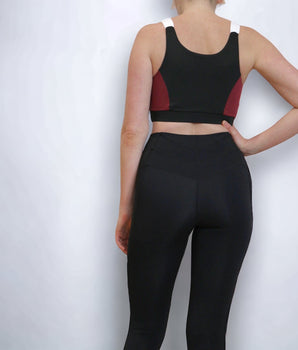
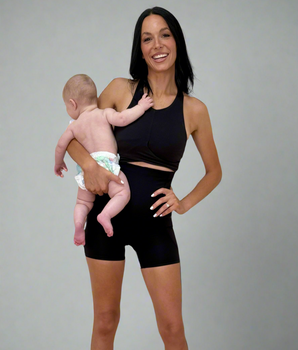
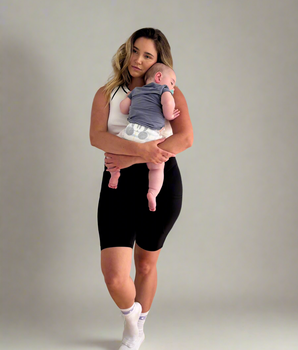
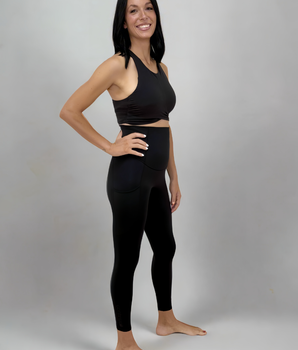
Many people like wearing gentle compression as they return to walking and exercise. Our postpartum supportwear offers comfortable support for your tummy, hips and pelvis as you rebuild strength. It's there to support you while you do the work, not to replace pelvic floor and core training. Read more in our compression guide.
The bottom line
Start gently, build strength before impact, listen to your body, and don't compare your timeline with anyone else's. You're not behind. You're recovering.
References
- Goom T, Donnelly G, Brockwell E. Returning to running postnatal: guidelines for medical, health and fitness professionals (2019).
- Australian Government Department of Health and Aged Care. Physical activity and exercise during and after pregnancy.
- Mayo Clinic. Sex after pregnancy: set your own timeline.
This article is general information only and isn't a substitute for personalised advice. Please speak with your GP, midwife, obstetrician or women's health physiotherapist about your own recovery.