

Compression gets talked about a lot in pregnancy and postpartum, but it's not always clear what it actually does. Here's the honest version from our osteopaths Dan and Ash ...
What compression does
Compression provides gentle external support. It can:
- support your abdominal wall and pelvis
- assist your posture
- support circulation
- help with swelling
Compression vs shapewear
Shapewear is about appearance. Compression is about function. Good compression supports your body without restricting your breathing or movement, so you can wear it comfortably all day.

What is graduated compression?
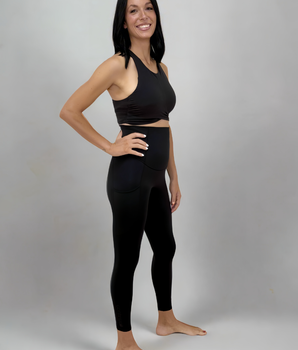
Graduated compression is firmer at the ankle and gradually decreases up the leg. This helps move fluid back up the leg, supporting circulation. It's why tired, heavy legs often feel better in graduated compression tights.

When to start wearing compression:
In pregnancy
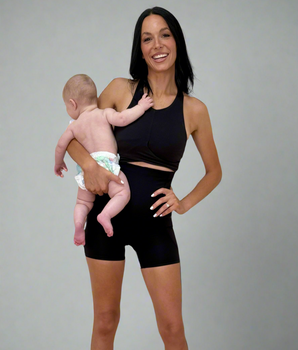
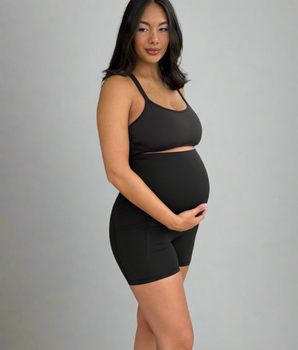
Any time you start feeling the load. That's often the second trimester, but many mums wear it from early pregnancy because the fabric grows with you. Our pregnancy tights and shorts have a bump panel designed to grow with you from the first trimester to the third.
After birth
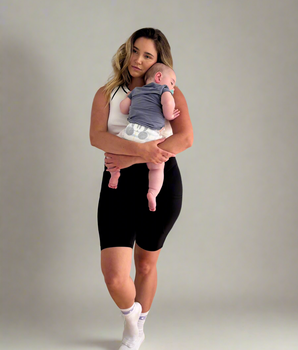
As soon as it feels comfortable. There's no rush and no rule, and you can keep wearing it for as long as you need. Browse our postpartum range.
What compression can't do ...
Compression is a support tool, not a standalone solution. It doesn't:
- fix ab separation
- replace strength work
- solve pain on its own
It works best alongside simple core and pelvic floor work, changes to how you move, and rest. Our guides to back and pelvic pain in pregnancy and the postpartum recovery timeline go through these.
How our RepairWear® technology fits in
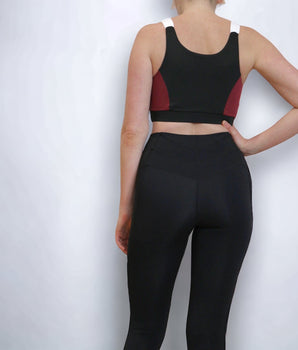
We're pregnancy osteopaths, and we designed our support wear around what we saw every day in clinic. RepairWear® panels apply gentle, consistent compression to support your lower back, and our leg panels provide graduated compression, all in buttery soft fabric with deep pockets. Learn more about the science behind our products.

Compression garments aren't suitable for everyone, including people with some circulation, heart or skin conditions. Check with your healthcare provider if you're unsure.







)